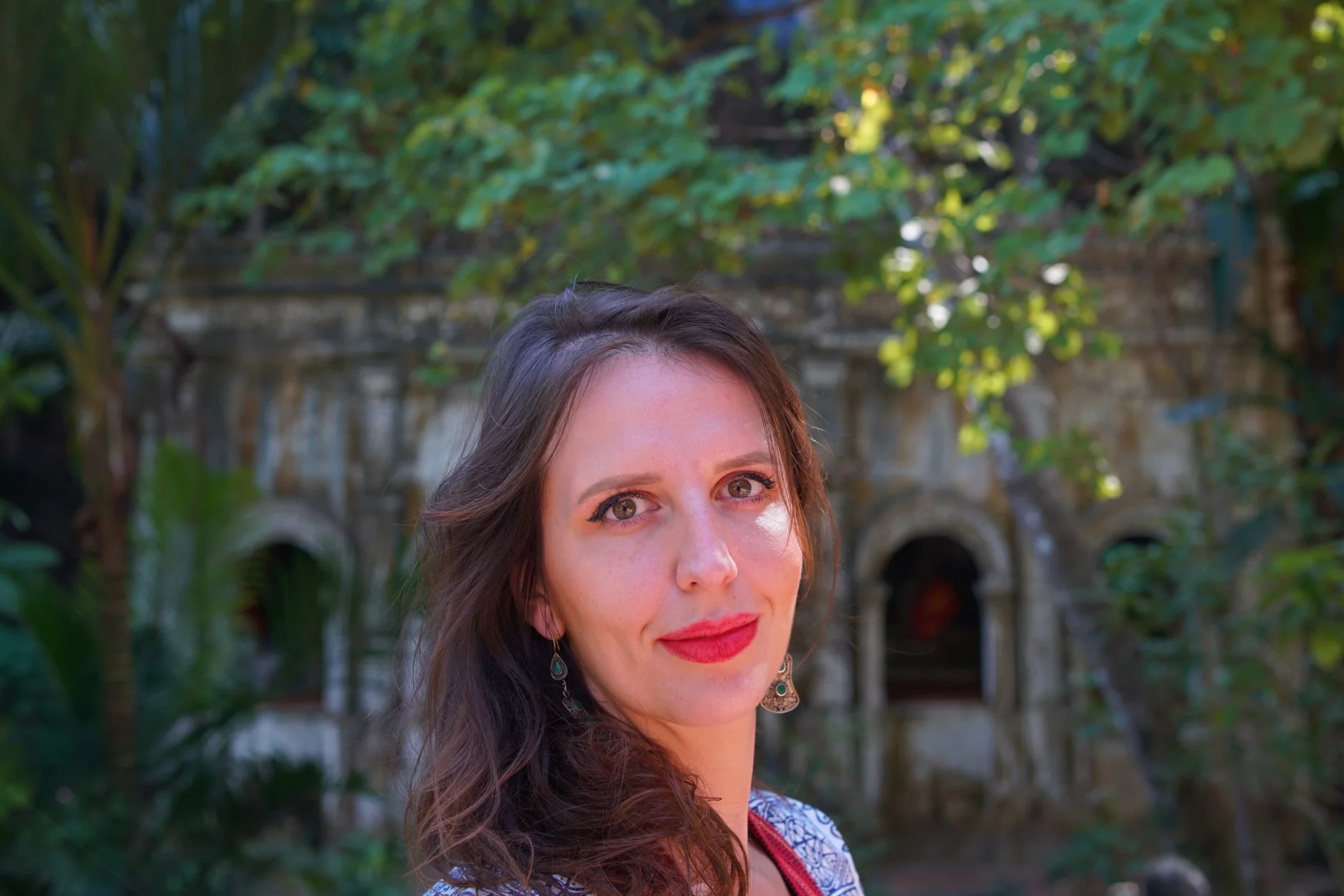
I am glad you found me.
My journey started with an interest in Jungian psychology over 15 years ago. I followed this interest by completing a PhD in Psychosocial and Psychoanalytic Studies, which later also led to the publication of my first book.
Alongside this, I started working with children and young people in clinics, schools and the NHS, and eventually qualified as a Doctor of Child Psychotherapy. For many years, my work was mainly psychoanalytic and psychodynamic. I also taught these approaches at universities and supervised the work of others.
Over time, I came to see both the value and the limitations of traditional psychotherapy. I still deeply value psychodynamic thinking - it remains at the heart of how I understand people and relationships - but I became increasingly interested in what talking alone sometimes cannot reach.
This curiosity gradually took me towards the body and the nervous system. We can understand something intellectually and talk about it many times, and yet still feel that something has not really shifted. Our experiences do not only exist in our thoughts. They can also show up - and more often than not, they do - in the body, in our emotions, physical sensations, reactions and ways of relating to the world.
I started exploring different ways of working with these deeper layers of experience. This led me to train in somatic work, meditation and mindfulness, and to explore the use of visualisation and imagination within therapeutic work.
Today, I bring these different strands together in what I call somatic meditation-based psychotherapy. My work is still rooted in psychodynamic and relational psychotherapy, and informed by my clinical experience and understanding of trauma, development and psychological risk. But it also makes space for the body, nervous system, meditation, imagination and whatever emerges in the moment.
For me, therapy does not have to be only about talking and understanding why we are the way we are. It can also be about experiencing ourselves differently and discovering new ways of being in relationship with ourselves, our bodies and others.
I am happy to be able to share the fruits of many years of clinical practice, learning and my own development through this way of working.
Qualifications and training
I am a qualified Child and Adolescent Psychotherapist (ACP) and hold a Doctorate in Child Psychotherapy. I am also a Trauma-Informed Somatic Counsellor (ACCPH) and Mindfulness Teacher (UK College of Mindfulness Meditation). I have undertaken additional training in approaches including Hakomi (mindfulness-based, body-centred psychotherapy) and Reiki energy work (Level 2).
My Approach
I do not believe in one size fits all. My way of working is adapted to the person I am working with, rather than expecting the person to adapt to a particular technique.
Through many years of working as a psychotherapist, I have seen that traditional psychotherapy can be incredibly helpful for some people, but does not work in the same way for everyone.
You may have tried traditional talking therapy before and felt that, despite understanding yourself better, something did not really change. Or perhaps you have explored workshops, breathwork, yoga, meditation or other practices. They may have brought a sense of release, an important realisation or even a powerful emotional experience — but afterwards you found yourself returning to the same patterns. Sometimes what is missing is continuity, integration and a space to make sense of what has emerged.
This is why I bring different approaches together.
I offer both shorter- and longer-term work, depending on what you need. The process often begins with becoming more connected with yourself through somatic and mindfulness-based work. Many of us have learned, for different reasons, to disconnect from our bodies, emotions or inner experience. We may understand our difficulties intellectually while still feeling unable to change them. For me, reconnecting with yourself is an important part of therapeutic work.
Another part of my approach is processing. Some of the difficulties we experience in the present can be connected to experiences from the past that have never been fully processed or integrated. Rather than only talking about these experiences, we can gently explore what happens when we meet them through the body, emotions and imagination.
I may use active imagination and parts work, exploring different parts of ourselves that carry particular feelings, beliefs or ways of protecting us. Sometimes these parts can feel as though they are still responding to something that happened many years ago. Working with them can allow us to experience and understand ourselves in a different way, rather than only analysing our difficulties from a distance.
And then there is the relational and talking part of therapy. Having another person there matters. Feeling safe enough with a therapist can create a space in which experiences can be explored, understood and gradually integrated. We can think together about what is happening, what it means and how it connects with your relationships and your life outside the therapy room.
At the centre of all of this is safety. I want to create a space where you can feel safe enough to be curious, to explore parts of yourself that may have been difficult to approach before, and to be brave enough to begin making changes in your life.
Ultimately, my role is not to tell you who you should become. It is to help you come into a deeper relationship with yourself and discover more of your own potential.